



Table of Contents
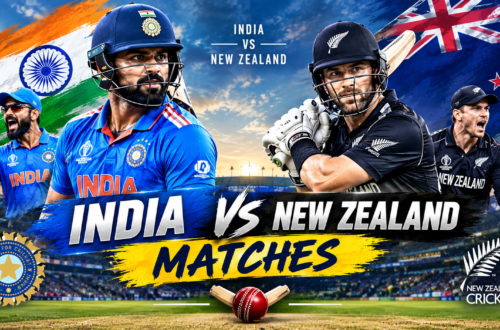
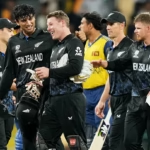
The India National Cricket Team vs New Zealand Players Complete Squad have featured some of the most competitive players in international cricket. Their contests regularly bring together world-class batting, quality pace bowling, clever spin, and strong all-round ability. India’s recent squads have included stars such as Shubman Gill, Virat Kohli, Rohit Sharma, Jasprit Bumrah, Ravindra Jadeja and Rishabh Pant, while New Zealand have relied on players including Mitchell Santner, Daryl Mitchell, Rachin Ravindra, Devon Conway, Glenn Phillips and Matt Henry.
The player battle has also produced memorable performances in major ICC tournaments. New Zealand’s squad combines experienced campaigners with emerging talent, while India have continued to develop a deep pool of batting, bowling and all-round options.
Complete Players List and Squad Details
India’s selection for the 2026 ODI series against New Zealand included a mixture of experienced stars and younger players. Shubman Gill was named captain, while Rohit Sharma, Virat Kohli, KL Rahul, Ravindra Jadeja and Mohammed Siraj provided significant international experience.
India National Cricket Team Players
| Player | Role | Team Strength |
|---|---|---|
| Shubman Gill | Batter | Top-order batting and leadership |
| Rohit Sharma | Batter | Opening experience |
| Virat Kohli | Batter | Middle-order stability |
| KL Rahul | Wicketkeeper Batter | Batting and wicketkeeping |
| Shreyas Iyer | Batter | Middle-order batting |
| Rishabh Pant | Wicketkeeper Batter | Aggressive batting |
| Yashasvi Jaiswal | Batter | Explosive top-order option |
| Ravindra Jadeja | All-Rounder | Spin bowling and batting |
| Washington Sundar | All-Rounder | Off-spin and lower-order batting |
| Nitish Kumar Reddy | All-Rounder | Seam bowling and batting |
| Mohammed Siraj | Bowler | Right-arm fast bowling |
| Arshdeep Singh | Bowler | Left-arm pace |
| Harshit Rana | Bowler | Fast bowling |
| Prasidh Krishna | Bowler | Pace and bounce |
| Kuldeep Yadav | Bowler | Left-arm wrist spin |
The exact squad depends on the format and selection window. The BCCI’s announced ODI group contained 15 players, with Shreyas Iyer’s participation subject to fitness clearance at the time of announcement.
New Zealand National Cricket Team Players
New Zealand’s player pool is built around experienced white-ball internationals and versatile all-rounders. Mitchell Santner remains a major leadership figure in the white-ball setup, while Tom Latham provides experience behind the stumps and at the top of the order.
| Player | Role | Team Strength |
|---|---|---|
| Mitchell Santner | All-Rounder | Spin bowling and leadership |
| Tom Latham | Wicketkeeper Batter | Opening and wicketkeeping |
| Devon Conway | Wicketkeeper Batter | Top-order batting |
| Rachin Ravindra | All-Rounder | Batting and left-arm spin |
| Daryl Mitchell | All-Rounder | Middle-order batting |
| Glenn Phillips | All-Rounder | Power hitting and fielding |
| Mark Chapman | Batter | Left-hand batting |
| Finn Allen | Batter | Aggressive opening |
| James Neesham | All-Rounder | Power hitting and seam bowling |
| Michael Bracewell | All-Rounder | Batting and off-spin |
| Matt Henry | Bowler | Right-arm fast bowling |
| Lockie Ferguson | Bowler | High pace |
| Kyle Jamieson | Bowler | Height, bounce and pace |
| Jacob Duffy | Bowler | Seam bowling |
| Ish Sodhi | Bowler | Leg-spin |
New Zealand’s 2026 T20 World Cup squad included Santner, Conway, Chapman, Daryl Mitchell, Henry, Ferguson, Jamieson, Sodhi, Ravindra, Phillips, Allen and several other key players.
Players, Squads and Key Performers
Both teams have different strengths across the three formats.
India generally possess a deep batting lineup capable of controlling an innings through accumulation or accelerating during the middle and final overs. The bowling group offers pace, swing and spin, giving the captain multiple tactical options.
New Zealand’s strength comes from balance and adaptability. Their squad contains several genuine all-rounders, allowing the team to build flexible combinations depending on conditions.
India’s key performers: Shubman Gill, Virat Kohli, Rohit Sharma, Jasprit Bumrah, Ravindra Jadeja and Kuldeep Yadav are among the most influential names associated with India’s recent international setup.
New Zealand’s key performers: Mitchell Santner, Rachin Ravindra, Daryl Mitchell, Devon Conway, Glenn Phillips and Matt Henry are central figures in the Black Caps setup.
New Zealand’s recent white-ball development has also created opportunities for younger players. New Zealand Cricket noted that Jacob Duffy and Matthew Fisher were part of the ODI setup in July 2026, while players such as Kristian Clarke and Jayden Lennox have also received opportunities.
Top Players From Both Teams
Shubman Gill
Shubman Gill has become one of India’s leading top-order batters and was named captain of India’s ODI squad against New Zealand in 2026. His ability to build an innings while maintaining a high scoring rate makes him particularly valuable in 50-over cricket.
Virat Kohli
Virat Kohli remains one of India’s most experienced batters. His ability to handle pressure, rotate the strike and construct long innings gives India a dependable option in the middle and top order.
Rohit Sharma
Rohit Sharma brings enormous experience as an opener. His aggressive powerplay batting can change the momentum of an ODI or T20I within a few overs.
Ravindra Jadeja
Jadeja offers India three major skills: batting, left-arm spin and outstanding fielding. That combination makes him especially valuable when team balance is important.
Mitchell Santner
Santner is one of New Zealand’s most important all-rounders and white-ball leaders. His left-arm spin can be particularly effective when conditions encourage slower bowling.
Rachin Ravindra
Ravindra has emerged as one of New Zealand’s most exciting all-round talents. He can contribute at the top of the order while also providing left-arm spin.
Daryl Mitchell
Daryl Mitchell is a powerful middle-order batter who can also contribute with the ball. His ability to play both controlled and aggressive innings makes him a key matchup player.
Matt Henry
Henry provides New Zealand with experience and control in the pace department. His ability to move the ball and attack the stumps makes him a significant threat with the new ball.
Key Players to Watch in the Match
Several players could have a major influence when India and New Zealand meet.
| Player | Team | Why to Watch |
|---|---|---|
| Shubman Gill | India | Top-order batting and captaincy |
| Virat Kohli | India | Experience in pressure situations |
| Rohit Sharma | India | Powerplay scoring |
| Ravindra Jadeja | India | Batting, bowling and fielding |
| Kuldeep Yadav | India | Wrist-spin threat |
| Mitchell Santner | New Zealand | Captaincy and spin |
| Rachin Ravindra | New Zealand | Batting and all-round ability |
| Daryl Mitchell | New Zealand | Middle-order power |
| Devon Conway | New Zealand | Reliable top-order batting |
| Matt Henry | New Zealand | New-ball and seam bowling |
The matchup between India’s batting depth and New Zealand’s varied bowling attack could be one of the central tactical battles.
Top Batters, Bowlers and All-Rounders
India’s Top Batters
India have several players capable of dominating different stages of an innings.
Shubman Gill offers technical control and consistency at the top.
Rohit Sharma provides explosive power during the opening overs.
Virat Kohli is particularly valuable when India need to rebuild after early wickets.
KL Rahul gives India flexibility because he can contribute as a specialist batter or wicketkeeper.
Rishabh Pant provides an aggressive option who can change the tempo of an innings quickly.
India’s Leading Bowlers
India’s bowling attack combines pace and spin.
Mohammed Siraj can exploit movement with the new ball.
Arshdeep Singh provides a left-arm angle and is particularly useful in limited-overs cricket.
Kuldeep Yadav gives India a specialist wrist-spin option capable of taking wickets in the middle overs.
Ravindra Jadeja provides control through left-arm orthodox spin.
For certain formats and selections, Jasprit Bumrah remains another major name in India’s bowling plans.
New Zealand’s Top Batters
New Zealand have considerable batting variety.
Devon Conway is capable of anchoring an innings while also accelerating when required.
Finn Allen offers an attacking option at the top.
Daryl Mitchell is a powerful middle-order presence.
Rachin Ravindra combines left-handed batting with useful spin.
Glenn Phillips is one of the team’s most dynamic power hitters and fielders.
New Zealand’s Leading Bowlers
Matt Henry provides experience and control with the new ball.
Lockie Ferguson brings genuine pace and can trouble batters with short-pitched deliveries.
Kyle Jamieson offers height, bounce and movement.
Mitchell Santner is a key middle-overs spinner.
Ish Sodhi provides a specialist leg-spin option.
Playing XI, Squad and Key Players
The final playing XI should not be confused with the wider squad.
A squad may contain 15 or more players, while only 11 can take the field. The final combination depends on pitch conditions, injuries, workload management, opposition matchups and the format.
For example, India’s 2026 ODI squad contained 15 players, while a documented first ODI playing XI featured Rohit Sharma, Shubman Gill, Virat Kohli, Shreyas Iyer, KL Rahul, Ravindra Jadeja, Washington Sundar, Harshit Rana, Kuldeep Yadav, Mohammed Siraj and Prasidh Krishna.
New Zealand also frequently adjust their XI according to conditions. Their selectors have used a combination of established players and emerging cricketers during the 2026 season.
Star Players and Their Key Statistics
Rather than focusing only on career totals, the most useful way to assess these players is through the roles they perform for their teams.
| Player | Team | Primary Role | Key Strength |
|---|---|---|---|
| Shubman Gill | India | Batter | Top-order consistency |
| Virat Kohli | India | Batter | Pressure batting |
| Rohit Sharma | India | Batter | Power hitting |
| KL Rahul | India | WK Batter | Versatility |
| Ravindra Jadeja | India | All-Rounder | Spin and batting |
| Kuldeep Yadav | India | Bowler | Wrist spin |
| Mitchell Santner | New Zealand | All-Rounder | Spin and leadership |
| Devon Conway | New Zealand | WK Batter | Top-order control |
| Rachin Ravindra | New Zealand | All-Rounder | Batting and spin |
| Daryl Mitchell | New Zealand | All-Rounder | Middle-order power |
| Glenn Phillips | New Zealand | All-Rounder | Power hitting |
| Matt Henry | New Zealand | Bowler | Seam bowling |
These roles are more useful for match analysis because a player’s impact is not always reflected by one headline statistic.
Team-Wise Players and Squad Breakdown
India Squad Breakdown
India’s squad can broadly be divided into four groups.
Top-order batters: Shubman Gill, Rohit Sharma, Virat Kohli and Yashasvi Jaiswal.
Middle-order and wicketkeeping options: KL Rahul, Shreyas Iyer and Rishabh Pant.
All-rounders: Ravindra Jadeja, Washington Sundar and Nitish Kumar Reddy.
Bowling unit: Mohammed Siraj, Arshdeep Singh, Harshit Rana, Prasidh Krishna and Kuldeep Yadav.
This gives India several possible combinations. They can strengthen batting with an extra all-rounder or increase bowling depth depending on conditions.
New Zealand Squad Breakdown
New Zealand’s squad also offers considerable flexibility.
Top-order options: Devon Conway, Finn Allen and Rachin Ravindra.
Middle-order batters: Daryl Mitchell, Mark Chapman and Glenn Phillips.
All-rounders: Mitchell Santner, Michael Bracewell and James Neesham.
Fast bowlers: Matt Henry, Lockie Ferguson, Kyle Jamieson and Jacob Duffy.
Spin options: Mitchell Santner and Ish Sodhi.
The depth allows New Zealand to adjust their XI according to pitch, weather and opposition.
Top Performers and Standout Players
India’s greatest advantage is the amount of international experience available throughout their squad. Players such as Kohli, Rohit, Jadeja and Rahul have played in high-pressure international matches for many years.
Gill represents the next generation of leadership and has already taken on an important role in India’s ODI structure.
New Zealand’s standout feature is their versatility. Santner can influence a match as captain, spinner and lower-order batter, while Ravindra and Mitchell provide important all-round options.
The Black Caps also have strong fast-bowling depth. Henry, Ferguson, Jamieson and Duffy give the team several different pace profiles.
Key Players, Recent Form and Performance
Recent selection decisions show that both teams are managing workloads and developing their squads rather than relying exclusively on the same 11 players.
New Zealand’s 2026 schedule has included rotation after the T20 World Cup, with several established players rested for parts of subsequent series. NZC specifically noted that Finn Allen, Mark Chapman, Daryl Mitchell, Glenn Phillips and Rachin Ravindra were rested for the South Africa T20I series after the World Cup campaign.
The India-New Zealand rivalry has also remained highly competitive. New Zealand won its first ODI series in India in January 2026, taking the three-match series 2-1, according to New Zealand Cricket. India then defeated New Zealand in the 2026 Men’s T20 World Cup final.
That recent history makes the next chapter of the rivalry particularly interesting.
India vs New Zealand Players Matchup to Watch
One of the most interesting battles will be India’s top-order batting against New Zealand’s seam attack.
If New Zealand can take early wickets, players such as Santner and Sodhi can then attack India’s middle order with spin.
For India, the key could be controlling New Zealand’s aggressive batters. Finn Allen and Glenn Phillips can score quickly, while Daryl Mitchell and Rachin Ravindra can build longer innings.
Another important contest will be spin against the middle order. Indian conditions traditionally bring spin into the game, while New Zealand’s all-rounders give them additional ways to respond.
Why Squad Depth Could Decide the Contest
Modern international cricket is no longer simply about having 11 star players. Teams need alternatives.
India have multiple wicketkeepers, several all-rounders, different types of fast bowlers and specialist spin options.
New Zealand have a similarly flexible structure, particularly in the all-rounder department. Their ability to rotate players has also become increasingly important because of international and franchise cricket workloads.
The team that chooses the right combination for the conditions could gain a significant advantage before the first ball is bowled.
Final Thoughts
The India and New Zealand rivalry features two squads with contrasting but complementary strengths. India bring enormous batting experience, multiple bowling options and considerable depth. New Zealand counter that with tactical flexibility, versatile all-rounders and a balanced bowling attack.
The upcoming 2026-27 New Zealand tour is especially significant because it includes five T20Is, five ODIs and two Tests, giving fans an extended look at both teams across formats.
For India, players such as Shubman Gill, Virat Kohli, Rohit Sharma and Ravindra Jadeja will remain central to the team’s plans. New Zealand will look toward Mitchell Santner, Rachin Ravindra, Daryl Mitchell, Devon Conway and Matt Henry to provide the experience and match-winning ability required against a strong Indian side.
Frequently Asked Questions
1. Who is the captain of India in ODIs?
Shubman Gill was named India’s ODI captain for the 2026 series against New Zealand.
2. Who is New Zealand’s white-ball captain?
Mitchell Santner is New Zealand’s main white-ball captain, although captaincy can be shared or transferred for individual series depending on workload and selection.
3. Who are India’s key players?
Shubman Gill, Virat Kohli, Rohit Sharma, KL Rahul, Ravindra Jadeja, Kuldeep Yadav and Mohammed Siraj are among India’s major players.
4. Who are New Zealand’s key players?
Mitchell Santner, Rachin Ravindra, Daryl Mitchell, Devon Conway, Glenn Phillips, Matt Henry and Lockie Ferguson are among New Zealand’s leading players.
5. Will the same players play every format?
No. Test, ODI and T20I squads can differ considerably. Selection depends on format, fitness, workload, conditions and team strategy. The announced 2026 squads already demonstrate significant movement between formats.